

 简体中文
简体中文

بدءًا من الحلول وحتى الإنتاج، نحن متخصصون في تصنيع المنتجات التي تحتاجها.

أخبار الصناعة
Mar 26,2026
How to Choose an Air Filter for Allergies: A Practical Guide
Indoor air quality plays a more significant role in allergy management than most people realize. The EPA estimates that indoor air can be two to five times more polluted than outdoor air, and for allergy sufferers, the composition of that air directly determines how frequently and severely symptoms occur. Choosing the right air filter is one of the most concrete steps you can take to reduce airborne allergen exposure — but the market is cluttered with misleading claims, misunderstood ratings, and products that look similar but perform very differently. This guide focuses on what actually matters when selecting a filter specifically for allergy control.
Understanding What You Are Filtering: Common Airborne Allergens
Before evaluating filters, it is worth knowing the particle sizes and characteristics of the allergens you are trying to capture. Not all allergens behave the same way in air, and this directly affects which filter technology will address your specific triggers.
- Pollen: Particles range from 10 to 100 microns in diameter. These are relatively large and settle quickly, but they are easily resuspended by air movement from HVAC systems, open windows, or foot traffic. Most mid-to-high efficiency filters capture pollen effectively.
- Dust mite allergens: The mites themselves are 100–300 microns and do not become airborne easily, but their fecal particles and body fragments — the actual allergenic material — range from 0.5 to 50 microns and can remain suspended in air for extended periods after disturbance.
- Pet dander: Ranges from 0.5 to 100 microns. The finest dander particles from cats and dogs are particularly problematic because they are lightweight, electrostatically charged, and can remain airborne for hours. Cat allergen (Fel d 1) is especially difficult to control due to its extremely small particle size.
- Mold spores: Range from 1 to 100 microns. Active mold colonies continuously release spores that become airborne and can trigger both allergic and asthmatic responses. Filters reduce spore counts in air but cannot address active mold growth at its source.
- Cockroach allergens: Particles from body parts and droppings range from 1 to 40 microns. These are a significant trigger for asthma in urban environments and require high-efficiency filtration to reduce airborne concentrations meaningfully.
The practical takeaway is that the most challenging allergens are in the submicron to 10-micron range. A filter that only captures larger particles will miss the fraction of allergen load that causes the most persistent symptoms.
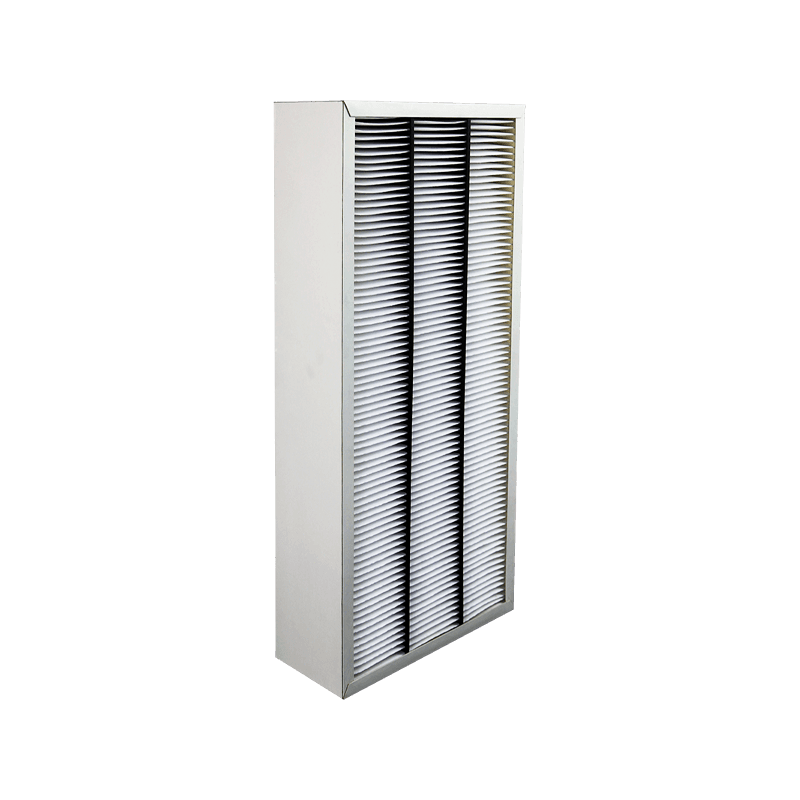
MERV Ratings Explained: What the Numbers Mean for Allergy Sufferers
The MERV (Minimum Efficiency Reporting Value) rating system, defined by ASHRAE Standard 52.2, measures a filter's ability to capture particles across specific size ranges. The scale runs from 1 to 16 for standard filters, with higher numbers indicating higher particle capture efficiency. For allergy management, understanding which MERV range actually addresses your allergens is more useful than simply buying the highest number available.
| MERV Rating | Particle Size Captured | Allergens Addressed | Typical Application |
|---|---|---|---|
| MERV 1–4 | > 10 microns | Large pollen, dust, lint | Equipment protection only — not suitable for allergy control |
| MERV 5–8 | 3–10 microns | Mold spores, most pollen, dust mite debris | Basic residential filtration — minimal allergy benefit |
| MERV 9–12 | 1–3 microns | Fine mold spores, pet dander, most allergens | Good residential choice for allergy sufferers |
| MERV 13–16 | 0.3–1 micron | Bacteria, fine dander, smoke particles, virus carriers | Best residential option — verify HVAC compatibility first |
For most allergy sufferers, MERV 11 or MERV 13 represents the practical sweet spot. MERV 11 captures the vast majority of meaningful allergens without imposing the airflow restriction that can come with MERV 13 and above. MERV 13 provides near-HEPA performance and is worth using if your HVAC system can handle the increased static pressure — check your equipment manual or consult an HVAC technician before upgrading from MERV 8 or lower.
HEPA Filters vs. MERV-Rated Filters: Which Belongs Where
True HEPA (High-Efficiency Particulate Air) filters capture 99.97% of particles at 0.3 microns — the most penetrating particle size where filtration efficiency is at its lowest. This standard, derived from nuclear industry specifications, means that HEPA filters are significantly more effective than even MERV 16 filters at capturing the finest allergen particles, including certain pet dander fractions, mold spore fragments, and fine particulate matter.
Why HEPA Filters Are Not Used in Central HVAC Systems
True HEPA filters have very high airflow resistance. When installed in a residential central air system designed for MERV 8 filters, a HEPA filter will restrict airflow so severely that the HVAC blower motor overheats, system capacity drops dramatically, and energy consumption rises significantly. Products marketed as "HEPA-type" or "HEPA-style" for HVAC use are not true HEPA — they typically achieve MERV 10 to 12 performance and use the HEPA name loosely.
Where True HEPA Filtration Belongs
True HEPA filtration is most appropriately deployed in standalone portable air purifiers, which are purpose-built to handle the motor load required to push air through a HEPA element. Placing a high-quality MERV 13 filter in your central HVAC system and using a true HEPA portable purifier in your bedroom creates a complementary two-layer filtration strategy that addresses both whole-home air quality and the space where you spend the most hours breathing.
Filter Media Types and Their Allergy Performance
Beyond ratings and standards, the physical construction of a filter determines how well it performs over its service life and whether it releases captured allergens back into the air as it loads up.
Pleated Polyester or Polypropylene Filters
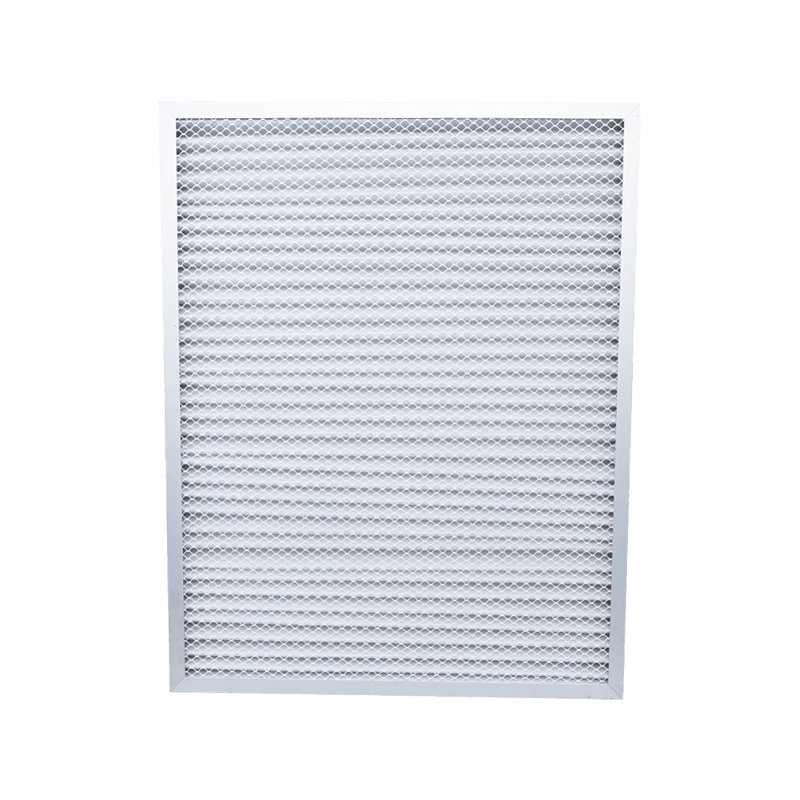
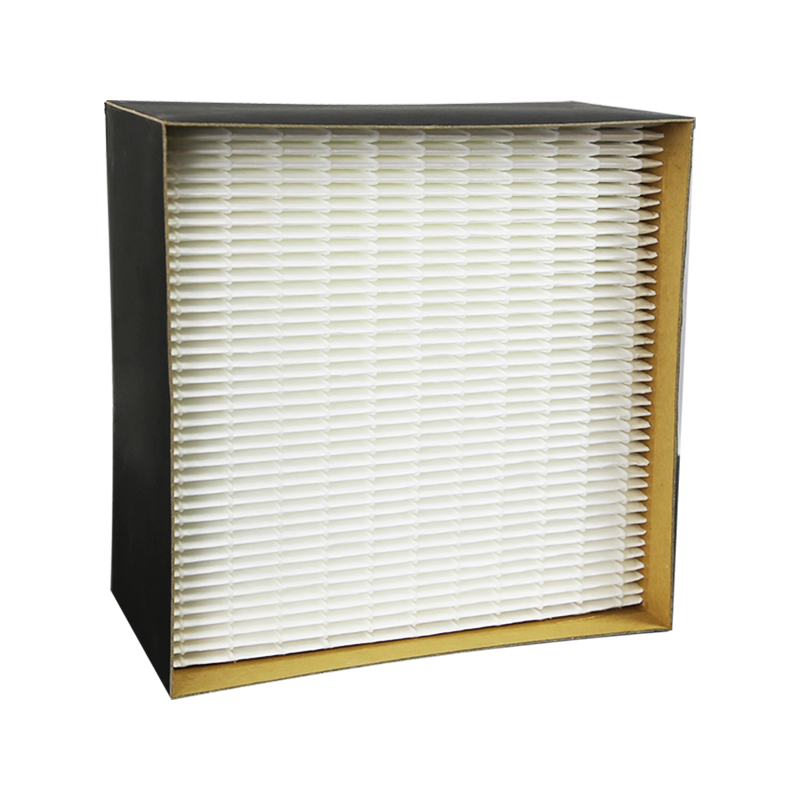
Pleated filters are the best choice for allergy control in central HVAC systems. The pleated construction dramatically increases surface area relative to the filter's face dimensions, allowing higher efficiency without proportionally higher airflow resistance. Electrostatically charged fibers in quality pleated filters attract and hold fine particles through electrostatic attraction in addition to mechanical interception. Look for filters with a pleat count of at least 10 to 14 pleats per foot — deeper, more numerous pleats provide better performance and longer service life between changes.
Fiberglass Flat Panel Filters
Flat fiberglass filters typically rate MERV 1 to 4 and are designed purely to protect HVAC equipment from large debris — not to improve air quality. They capture almost nothing in the allergen-relevant particle size range. Replacing these with a quality pleated filter is one of the single most impactful changes an allergy sufferer can make to their indoor environment at minimal cost.
Electrostatic Washable Filters
Washable electrostatic filters attract particles via static charge generated by airflow through layered polypropylene media. When new, they typically achieve MERV 8 to 10 performance. However, the electrostatic charge degrades with each wash cycle, and efficiency drops significantly over time. They also require thorough cleaning and complete drying before reinstallation — a wet filter promotes mold growth. For allergy sufferers, disposable pleated filters generally outperform washable options over a service period.
Activated Carbon Add-Ons
Some filters incorporate a layer of activated carbon alongside the particulate filtration media. Activated carbon adsorbs volatile organic compounds (VOCs), odors, and certain gaseous pollutants through chemical bonding — it does not capture particulate allergens. For allergy sufferers who are also sensitive to chemical odors, cleaning product fumes, or VOCs from new furnishings, a combination particulate-plus-carbon filter can address multiple triggers simultaneously. The carbon layer in combination filters is typically thin and saturates faster than dedicated carbon filtration units, but provides meaningful odor reduction in standard HVAC applications.
Filter Size, Fit, and the Bypass Air Problem
A MERV 13 filter that does not fit properly in its housing performs no better than a MERV 4 filter. Bypass air — unfiltered air flowing around the filter edges through gaps between the filter and the filter rack — completely undermines the efficiency of the filter media. This is one of the most overlooked factors in residential air filtration and is a significant reason why some allergy sufferers report no improvement after upgrading their filter.
Always measure your filter slot dimensions precisely — length, width, and depth — before purchasing. Nominal filter sizes printed on filter frames are typically 0.5 to 1 inch smaller than the labeled dimension (a "20x25x1" filter actually measures approximately 19.5 x 24.5 x 0.75 inches). If your HVAC filter slot has accumulated warping, rust, or damage that creates gaps, address this with foam tape gasket material applied to the filter frame edges to seal the fit. Filters with beveled, moisture-resistant cardboard frames seal more consistently than budget filters with thin, easily crushed frames.
How Often to Replace Your Allergy Filter
Filter replacement frequency directly determines whether your filtration investment is actually protecting your air quality. A clogged filter not only stops capturing new allergens effectively — it can also become a reservoir that degrades air quality as particles are dislodged back into the airstream, and it severely restricts HVAC airflow, increasing energy costs and equipment wear.
General replacement guidelines for allergy households:
- MERV 11–13 pleated filters (1-inch thickness): Replace every 60 days in homes with pets or high allergen loads; every 90 days in average single-occupant homes with no pets. Never stretch to the 12-month intervals sometimes printed on packaging — these assume average residential conditions, not allergy-sensitive households.
- MERV 11–13 pleated filters (4-inch or 5-inch thickness): The larger surface area loads more slowly. Replace every 6 to 9 months depending on pet and allergen load. These deep filters are significantly more cost-effective per year than 1-inch filters changed every 60 days.
- Portable HEPA purifier filters: Replace the HEPA element every 12 to 18 months depending on usage hours and manufacturer guidance. Replace the pre-filter every 1 to 3 months to protect the HEPA element from premature loading with larger particles.
- During high pollen season: Check filters visually every 30 days regardless of scheduled replacement cycle. Heavy pollen weeks can load a filter in half the normal time. A filter that appears uniformly gray and dense across its surface needs replacement regardless of age.
Choosing Between a Central HVAC Filter Upgrade and a Portable Air Purifier
Many allergy sufferers face a practical question: is it better to invest in a higher-quality central HVAC filter, or to add a portable air purifier to the bedroom? The answer depends on several factors specific to your home and allergy profile.
A central HVAC filter upgrade to MERV 11 or 13 is the most cost-effective first step because it treats air throughout the entire conditioned space every time the system runs. However, HVAC systems typically run 8 to 12 hours per day on a call-for-heating or cooling basis — they are not continuously filtering air during the hours when the system is idle. During these periods, allergens settle and resuspend without being captured.
A portable true HEPA air purifier running continuously in the bedroom fills this gap. It provides constant air circulation and filtration in the space where you spend 6 to 8 hours per night. For allergy sufferers whose most significant symptoms are nighttime nasal congestion, morning sneezing, or sleep disruption, adding a bedroom HEPA purifier sized for the room's square footage often produces more noticeable symptom improvement than a central filter upgrade alone.
When selecting a portable purifier, look for a unit with a Clean Air Delivery Rate (CADR) rating at least two-thirds of the room's square footage. A bedroom of 150 square feet needs a CADR of at least 100 cfm for effective allergen removal. Avoid units that rely solely on ionization or UV without a physical HEPA filter — ionizers produce ozone as a byproduct, which is itself an airway irritant and can worsen asthma symptoms.
A Practical Selection Checklist for Allergy Air Filters
Use the following criteria as a structured framework when evaluating specific filter products for your allergy management needs:
- Confirm the filter's MERV rating is 11 or higher for meaningful allergy control — ignore marketing labels like "allergen reduction" or "allergy defense" unless accompanied by a verified MERV rating.
- Verify your HVAC system can accommodate the filter's static pressure drop — if upgrading from MERV 8 to MERV 13, have your system evaluated first or choose a 4-inch deep filter which achieves equivalent efficiency at lower resistance.
- Choose pleated construction over flat panel — more surface area means better performance and longer service life at equivalent resistance.
- Measure your filter slot precisely and verify actual filter dimensions, not just nominal dimensions, to prevent bypass air gaps.
- Set a calendar reminder for filter replacement — 60 days for 1-inch filters in pet households, 90 days otherwise, and check visually during peak pollen season.
- Add a true HEPA portable purifier in the primary sleeping space for continuous overnight allergen capture regardless of HVAC operating status.
- Avoid ozone-generating air cleaners, including ionizers without physical filters, as they can aggravate respiratory allergy symptoms rather than relieve them.
Air filtration addresses only one pathway of allergen exposure — it complements but does not replace allergen source reduction measures such as encasing mattresses, regular vacuuming with a HEPA-equipped vacuum, controlling indoor humidity to below 50% to inhibit mold and dust mite growth, and bathing pets weekly to reduce dander output. Combined with the right filter strategy, these measures form a comprehensive indoor allergen management approach that produces measurable improvements in symptom frequency and severity.
ما هي الاختلافات والمزايا بين المرشحات الأكياسية متوسطة الكفاءة مقارنة بالمرشحات التقليدية؟
ما هي الشركة المصنعة الجيدة لمرشحات HEPA؟ كيفية تقييم الشركة المصنعة؟
المنتجات ذات الصلة
 Tel: +86-13813766750
 E-mail:
  Add: 5169، شارع بينجانج، منطقة بينجيانغ الفرعية، مدينة هايمن، جيانغسو، الصين











Copyright 2023 شركة نانتونغ هينكا لحلول البيئة المحدودة. All Rights Reserved
 مصنعي فلاتر الهواء HEPA مصنع مرشحات الهواء HEPA المخصص