简体中文

بدءًا من الحلول وحتى الإنتاج، نحن متخصصون في تصنيع المنتجات التي تحتاجها.
بيت / أخبار / أخبار الصناعة / Charcoal Filter Material: A Practical Guide for Air Purifier and HVAC Brands

If you are comparing charcoal filter material for an air purifier, a fresh-air unit, or an HVAC system, the first thing to know is that “charcoal” is a broad starting point, not a final specification. The material may be coconut shell carbon, coal-based carbon, or a treated carbon blend. It may arrive as a honeycomb block, a non-woven cloth, a granular pad, or a composite layer bonded to HEPA media. Each format changes how much surface area is available, how much pressure drop the filter adds, and how long the filter can keep working before replacement.
We have been manufacturing air filters in Haimen since 2004, and most of the useful conversations we have with customers start with the same questions: what gas are you trying to remove, how much airflow does the system move, and what space can you give the filter? Once those answers are clear, the material choice becomes much easier.
Activated carbon works by adsorption, not by simple trapping. Odor molecules and many volatile organic compounds pass through the filter and bind to the internal pore structure of the carbon. This is why surface area matters more than the weight of the material alone. A small amount of high-activity carbon can outperform a heavier but poorly activated filler, depending on the gas and the contact time.
For filter buyers, the practical point is that carbon loading, binder type, and substrate structure must be balanced against airflow. A dense carbon bed may have good adsorption capacity, but it can also create a pressure drop that forces the fan to work harder or reduces clean air delivery. A lighter non-woven layer may be easier to fit into a thin appliance, but it may have less capacity for continuous odor control. Good charcoal filter material is therefore a system choice, not a catalogue item chosen in isolation.
| Format | Typical use | What to check |
|---|---|---|
| Honeycomb carbon block | Odor, VOC, and formaldehyde control in purifiers and fresh-air units | Channel size, carbon grade, pressure drop, and dust release |
| Carbon-impregnated non-woven | Thin composite filters, pre-filters, and combined HEPA layers | Binder stability, carbon load, and airflow resistance |
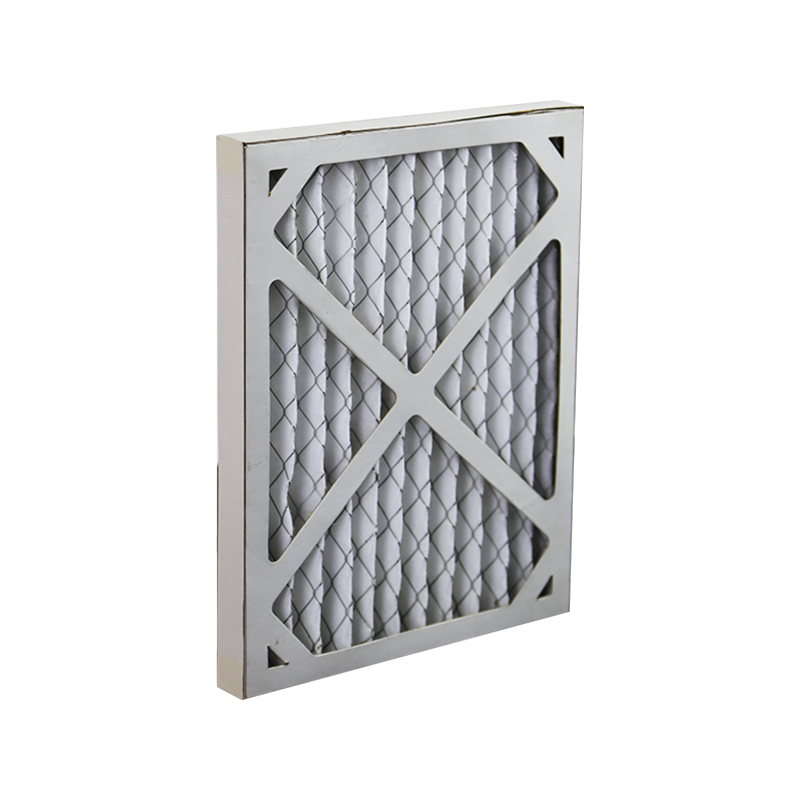
| Granular carbon pad | General odor control, furnace filters, and appliance filters | Carbon fill consistency, vibration resistance, and service life |
| Coated or sprayed carbon media | Compact filters where space is tight | Adhesion, coverage uniformity, and handling loss |
Most charcoal filter material used in air treatment falls into three broad families. The right one depends on the housing, the target gas, and how often the filter will be replaced.
Honeycomb structures give air a straight path through a carbon block while still offering a large contact area. They are common in room air purifiers, fresh-air systems, and applications where formaldehyde, TVOC, or persistent odors need to be reduced. The open channels keep pressure drop manageable, but channel geometry matters. Narrow channels improve contact, while wider channels help with higher airflow. If the filter also needs to capture particles, a honeycomb carbon stage is often paired with a HEPA stage.
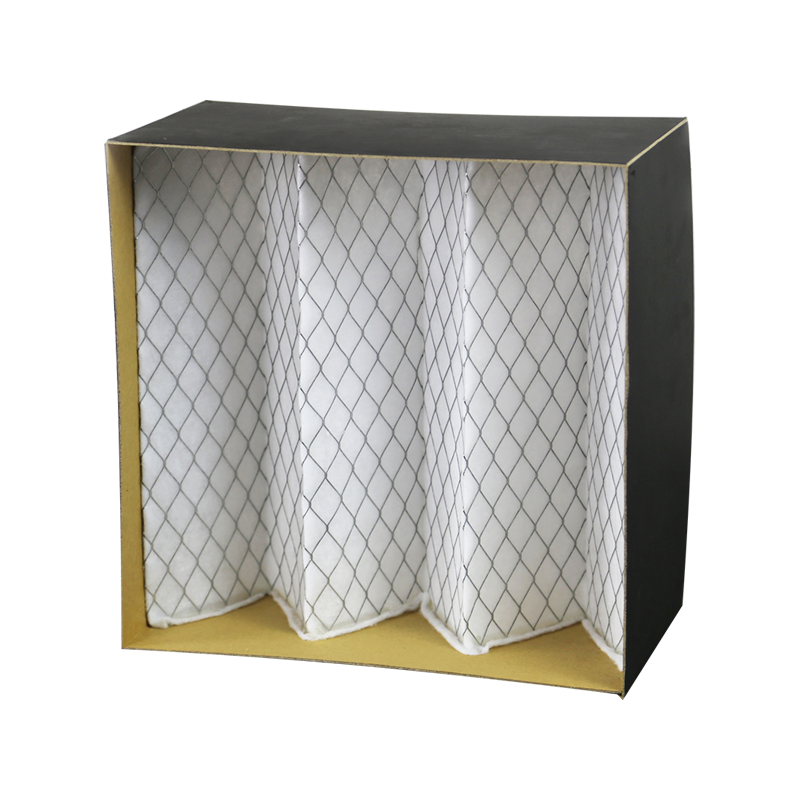 PCCHC Honeycomb Activated Carbon FilterHoneycomb activated carbon filter with plastic or paper cells and adjustable carbon fill ratio for customized gas-phase air purification.View Product →
This format combines carbon with a fiber matrix, so it can be thin, flexible, and easy to cut into special shapes. It is useful in household air purifiers and combination filters where space is limited. The trade-off is that carbon loading per square meter is usually lower than in a thick block. For light odor control or as a polishing layer behind a primary filter, it can be a good fit. For heavy chemical loading, it may need more area or a thicker carbon stage.
Granular media gives good coverage at a lower cost and is often used in furnace filters, appliance filters, and general ventilation products. The key is consistent fill and a stable enclosure, because loose carbon can settle or vibrate during shipping and operation. When we quote a granular pad, we usually ask about transport conditions and expected service life, not just the carbon weight.
For household air purifier projects, the filter choice often comes down to the available depth and the target replacement interval. You can see the broader context on our household air purifier filter page.
Coconut shell carbon is often chosen for gas-phase filtration because it can be developed with a fine pore structure that suits many odor and VOC molecules. Coal-based carbon can offer good mechanical strength and cost efficiency, and it is widely used in industrial and HVAC applications. Neither is automatically “better” without a target gas and a test method.
In practice, we look at three things before recommending a carbon type: the molecule you want to remove, the humidity in the air stream, and the available residence time. High humidity can compete with adsorption, especially for polar gases. Short residence time can limit the benefit of a high-capacity carbon. A well-matched carbon grade and a well-designed air path usually matter more than a simple material label.
Carbon loading is not a number that can be maximized without consequence. More carbon can improve capacity, but it also occupies space and can raise pressure drop. The useful question is how much clean air the system needs to deliver at the end of the filter's service life.
For HVAC and fresh-air systems, the filter may run continuously for months, so airflow resistance and dust holding become important. A honeycomb or corrugated carbon stage can help maintain airflow while still providing gas-phase contact. For portable air purifiers, the filter may be smaller and replaced more often, so the design may favor a compact composite with HEPA and carbon in one cartridge. The same material can behave differently in each case.
 PCCW Corrugated Activated Carbon Air FilterPlate-type corrugated carbon filter with impregnated activated carbon and low resistance for large-air-volume HVAC and fresh-air applications.View Product →
We often use a simple sequence when evaluating a new project: define the target gas, estimate the required residence time, choose a media format, and then confirm the pressure drop at the maximum airflow. If the system has a fan curve, the filter should be tested against that curve, not only against a laboratory flow rate. This is also why the same charcoal filter material may need different pleat counts, frame depths, or sealing methods across two otherwise similar products.
For ventilation and HVAC projects, our HVAC filter application page shows how carbon stages are combined with primary and high-efficiency filtration.
When you specify charcoal filter material, ask for more than a material safety data sheet. A useful supplier should be able to explain the carbon grade, the binder or substrate, the target gas, and the test method used to support the performance claim. They should also be able to show how the finished filter will hold together after shipping and vibration.
Common checks include:
For combination filters, the particle stage and the carbon stage should be evaluated together. A HEPA layer may capture fine particles that would otherwise occupy carbon pores, while a carbon layer may change the pressure load on the fan. If the filter is being designed for an air purifier or a fresh-air unit, it is often worth testing the complete cartridge rather than the carbon media alone.
 Multifunctional Activated Carbon HEPA FilterCombined HEPA and modified activated carbon filter for particles, formaldehyde, VOCs, and odors, with customizable frame and carbon formulation.View Product →
Because we work on custom filter projects, we usually build a sample around the customer's housing and airflow target, then review the results with the product and quality teams. This is slower than choosing a catalogue item, but it reduces the risk of a filter that looks right on paper and underperforms in the finished appliance.
Charcoal filter material is one of those components that rewards a little early thinking. Decide what the filter must remove, how much space it has, and how the fan will behave over time. Then choose the carbon type, format, and loading to match. If you are planning a new air purifier, fresh-air unit, or HVAC filter, we are happy to review the application with you and suggest a practical material route.
Copyright 2023 شركة نانتونغ هينكا لحلول البيئة المحدودة. All Rights Reserved
 مصنعي فلاتر الهواء HEPA مصنع مرشحات الهواء HEPA المخصص
 Tel: +86-13813766750
 E-mail:
 Add: 5169، شارع بينجانج، منطقة بينجيانغ الفرعية، مدينة هايمن، جيانغسو، الصين